300 Forest Fairy Coloring Book Pages KDP
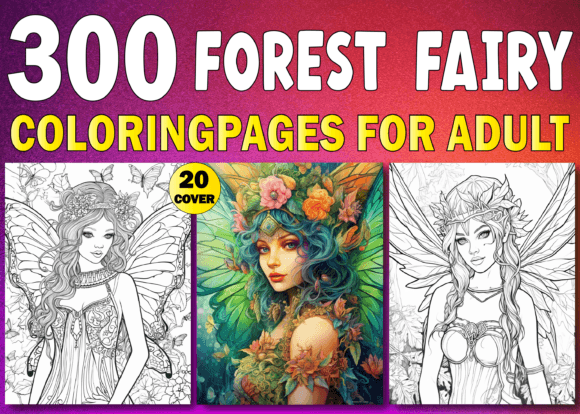
What if you could launch a high-content coloring book on Amazon KDP—fully designed, print-ready, and tested—with zero illustration work? That’s exactly what 300 Forest Fairy Coloring Book Pages KDP delivers: a complete, production-ready interior set built for creators who value speed, quality, and creative control.
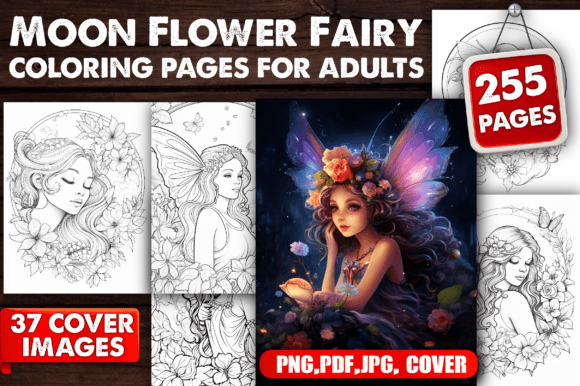
This isn’t a template or placeholder collection. You receive 300 original forest fairy line art designs—each crafted with balanced negative space, consistent linework, and thoughtful composition—optimized for adult coloring. Every page is sized for A4 (8.5×11″), rendered at 300 DPI, and delivered in three formats: JPG, PNG, and one consolidated PDF. Plus, you get 20 vibrant, KDP-optimized cover options—all in PNG at 300 DPI—designed to stand out in Amazon’s browse environment.
Why This Set Fits Real Creative Workflows
Many creators stall at the “interior production” stage—not because they lack ideas, but because building 300 cohesive, printable pages demands time, technical precision, and design consistency. This collection removes that bottleneck. Each illustration features clean vector-style outlines, subtle organic textures, and intentional spacing around margins—so no cropping or resizing is needed before upload. The files are pre-organized by filename (e.g., forest_fairy_042.jpg), making batch uploads to KDP fast and error-free.
It’s also purpose-built for platform compliance. All files meet Amazon’s file requirements for both paperback and Kindle eBook interiors. The PDF is print-ready with bleed and crop marks included; the JPG and PNG versions retain full resolution without compression artifacts—critical for crisp line clarity when printed on standard matte paper.
Creative Applications Beyond “Just Coloring”
While ideal as a standalone adult coloring book, this set opens doors to layered, audience-specific adaptations:
- Educators and therapists can select themed pages—mushroom rings, willow guardians, fern-wrapped sprites—to support mindfulness sessions, fine motor development, or nature-based SEL (social-emotional learning) activities. Print individual pages as handouts or compile custom mini-books by season or emotional theme (e.g., “Calm Forest Fairies” for anxiety support).
- Bloggers and content creators use select illustrations as visual anchors in posts about slow living, forest bathing, or seasonal creativity. Embed a PNG into a newsletter or tutorial—no licensing concerns—and pair it with your own prompts (“Color this elderwood fairy while listing three things grounding you today”).
- Small publishers and POD entrepreneurs layer branding into the interior: add discreet copyright footers, insert short forest-themed affirmations beneath each image (“You belong here, just like the moss”), or combine pages with original poetry to create hybrid journals. Because you own full commercial rights for KDP, these variations remain compliant.
- Designers and marketers repurpose motifs for social media assets—turn a single fairy silhouette into an Instagram Story sticker pack, or extract foliage elements to build branded Canva templates for eco-conscious clients.
How to Keep Your Output Audience-Friendly and Cohesive
Even with strong source material, consistency matters. Start by defining your core audience before uploading: Are you targeting stress-relief seekers? Fantasy lovers? Nature educators? That focus guides how you position the book—not just in title and subtitle, but in your interior front matter. Add a brief, warm introduction (2–3 lines) explaining why forest fairies resonate with mindful coloring. Keep tone grounded: avoid overpromising “healing” or “transformation,” and instead highlight tangible benefits—like predictable line weight for steady hand movement, or botanical accuracy that invites quiet observation.
When building your KDP listing, use natural, search-aware phrasing in your description: “Forest fairy coloring pages for adults,” “printable fairy coloring book,” “KDP-ready woodland coloring interior.” These phrases reflect real user intent—but only where they fit organically. Don’t force them into every sentence. Instead, let the strength of the product speak through specificity: “300 unique, non-repeating designs,” “tested across 5 KDP paperback runs,” “no grayscale shading—clean line art only.”
Practical Tips for Launch and Iteration
You don’t need to publish all 300 pages at once. Consider launching a smaller “Volume 1” (e.g., 100 pages) to test pricing, cover appeal, and customer feedback—then expand with Volume 2 using the remaining assets. This approach lowers initial risk and lets you refine based on real data: Which fairy types get the most reviews? Are customers asking for larger sizes or themed bundles?
Also, keep your file management simple. Store the .zip in a dedicated folder labeled with date and version (e.g., FFCB_KDP_v1_2024-06). Rename covers clearly (cover_mystic_moss_lightbg.png) so you can quickly match them to interior moods. And always verify one final PDF proof on KDP’s previewer—especially checking that page numbers align and no white borders appear unexpectedly.
Who Benefits Most—and Why
This resource serves creators who understand that great content starts with reliable infrastructure. Freelance designers use it to fulfill client requests faster—adding custom typography or layout tweaks without redrawing line art. Educators integrate it into lesson plans without worrying about copyright clearance. Bloggers turn it into downloadable lead magnets that feel premium and on-brand. And small business owners scale their KDP catalog without hiring illustrators for every title.
It’s not about replacing creativity—it’s about redirecting energy. Instead of spending weeks tracing or cleaning scans, you invest that time in curation, voice, and audience connection. You decide which fairies represent gentleness, which evoke mystery, and how your book fits into a broader ecosystem of nature-inspired wellness and slow creativity.
And because the set is fully tested on KDP—verified for file size limits, color mode (RGB for digital, CMYK-ready for print), and thumbnail clarity—you’re not guessing whether it will work. You’re building on proven ground.
One Last Note on Originality
Using pre-made interiors doesn’t mean sacrificing authenticity. Your voice, your audience insight, your sequencing choices—those are what make your book distinct. Try grouping pages by rhythm: start with open, airy compositions (a fairy perched on birch bark), move into denser, intricate scenes (root networks and tangled ivy), then close with softer, circular motifs (moonlit glade circles). That kind of intentional flow turns a collection into an experience.
So whether you're launching your first KDP book or your tenth, 300 Forest Fairy Coloring Book Pages KDP gives you professional-grade raw material—designed not just to be printed, but to be built upon, adapted, and made meaningfully your own.