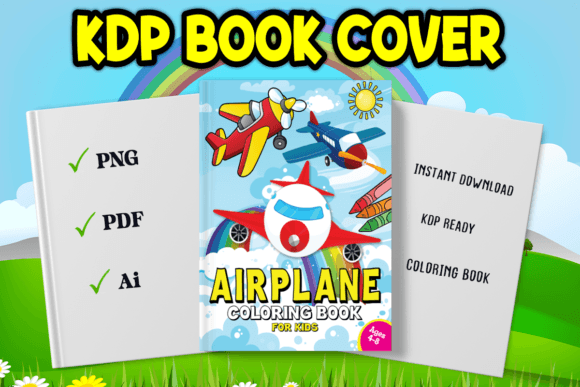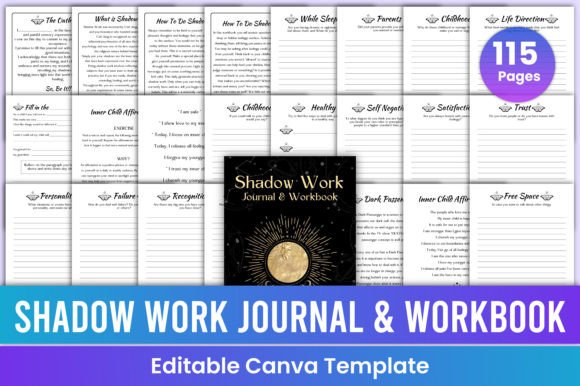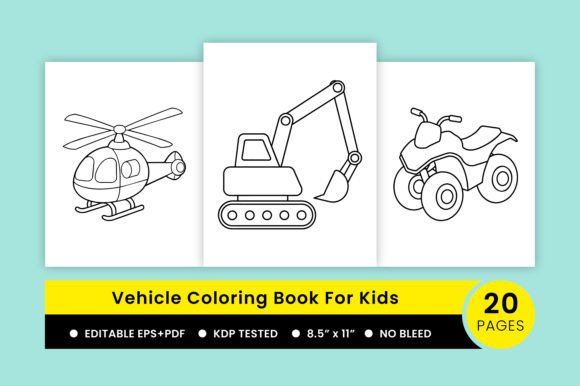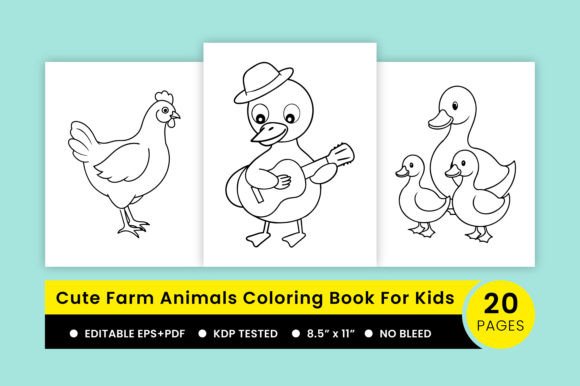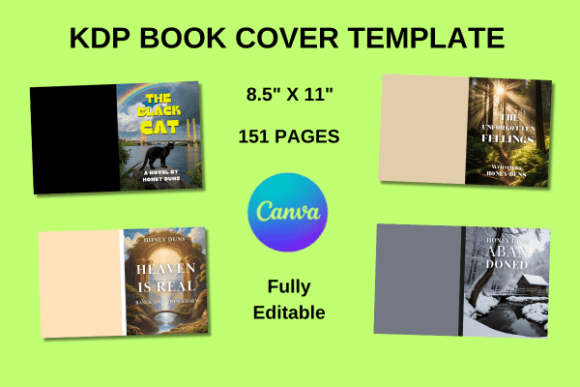
KDP Book Cover Template Editable Canva: Your Fast, Flexible, and Fully Free Path to Professional Amazon Book Covers
Launching a book on Amazon KDP shouldn’t stall at the cover — yet for many new authors, self-publishers, and creative entrepreneurs, that’s exactly where momentum dies. You’ve written your novel, designed your coloring book, or filled your journal with intention — but then you hit the wall: How do I make a cover that looks pro, fits KDP’s strict specs, and doesn’t cost $200 or require Photoshop skills?
Enter the KDP Book Cover Template Editable Canva — not just another design file, but a workflow solution built for real people using real tools. Specifically, the 4-piece set you’ll often see described as “Compatible size 8.5 x 11 — For 205 pages Book Interior — Fully Editable in Canva Free Account” is more than marketing copy. It’s a carefully calibrated toolkit that bridges the gap between creative vision and Amazon-ready output — without asking you to upgrade to Canva Pro, hire a designer, or wrestle with bleed zones and resolution settings.
Why This Template Set Solves Real Problems (Not Just Aesthetic Ones)
Most KDP cover templates fail at one of three things: they’re sized incorrectly, locked behind paid software, or so cluttered with layers that editing feels like defusing a bomb. This KDP Book Cover Template Editable Canva set avoids those pitfalls by design.
First, the sizing isn’t approximate — it’s precise. The 8.5" x 11" dimensions match KDP’s standard paperback trim size *and* account for spine width based on an interior of exactly 205 pages. That means no guesswork: plug in your page count, adjust the spine label text, and the template auto-calculates the correct width (within KDP’s acceptable tolerance). No manual math. No last-minute panic when your uploaded file gets rejected for “incorrect dimensions.”
Second, every element — title font, author name, background graphics, spine text box, back cover blurb area — lives on its own layer in Canva. And yes — this works flawlessly in the free version of Canva. You don’t need Canva Pro to ungroup, recolor, resize, or replace any component. That’s rare. Most “editable” templates rely on Pro-only features like background remover or advanced animation — but here, simplicity is baked in.
What’s Inside the 4-Piece Set — And Why You Need All Four
The “4 Pcs Book Cover for KDP” label isn’t filler. Each file serves a distinct, non-redundant role:
- Front Cover Template: Optimized for visual impact at thumbnail size. Includes smart guides for safe margins (so your title doesn’t get cut off), pre-set typography hierarchy, and optional subtle texture overlays — all editable with one click.
- Spine Template: Often overlooked, but critical for discoverability in physical browsing (even on Amazon’s shelf mockups). This file includes dynamic text fields for title + author, plus a clean vertical alignment guide — no more crooked spines or overlapping letters.
- Back Cover Template: Designed for conversion, not just compliance. Features a structured layout: space for your compelling blurb (with character-count guidance), a barcode placeholder aligned to KDP’s exact 2" x 1.25" spec, and optional author bio or review quote sections — all drag-and-drop friendly.
- Full Wrap Mockup: A single-file visual preview showing how front, spine, and back align *together*. Not for upload — but invaluable for checking color continuity, font consistency, and overall balance before final export.
Together, these four pieces eliminate the biggest friction points: misaligned elements, inconsistent branding across surfaces, and uncertainty about how it’ll look “in the wild.” You’re not assembling a puzzle — you’re refining a unified system.
Works Seamlessly Across Genres — Without Reskinning
One of the quiet strengths of this KDP Book Cover Template Editable Canva set is its genre-agnostic flexibility. Whether you’re publishing:
- A coloring book — swap out the background for a soft neutral or subtle pattern; use bold sans-serif fonts for titles like “Stress Relief Doodles”;
- A poetry collection — lower opacity on background imagery, add delicate line art, choose serif fonts with gentle contrast;
- A novel — layer atmospheric photo textures (Canva’s free library has thousands), adjust saturation to match tone (“mystery” = desaturated blues; “romance” = warm golds);
- An undated journal or planner — simplify to minimalist lines, monochrome accents, and generous whitespace for breathing room.
No need to hunt for separate templates per niche. The structure supports variation — not constraint.
Editing Is Literal One-Click Work — Here’s How
You don’t need design training. You need clarity. And this template delivers it through intentional constraints:
- Text is pre-formatted but fully replaceable: Click any headline → type your title → watch font size and spacing adapt automatically. Same for author name and subtitle.
- Colors change globally: Select the main palette swatch (usually grouped near the top) and update once — all matching elements shift instantly. Great for testing “should my thriller be deep navy or charcoal gray?”
- Images drop in cleanly: Drag your own photo or illustration into the designated frame — it auto-crops and centers. Prefer Canva’s stock? Search “botanical,” “vintage paper,” or “abstract gradient” right inside the editor.
- Export is one button — no guessing: Use Canva’s “Download” → “PDF Print” option. That setting embeds fonts, preserves CMYK-safe colors (critical for KDP printing), and outputs at 300 DPI. Done.
This isn’t “editable” in theory — it’s editable in practice, within five minutes of opening the file.
Real-World Time Savings (That Add Up)
Consider the alternatives:
- Hiring a designer: $150–$400+, 3–10 day turnaround, revision limits, ownership questions.
- Using Canva from scratch: 2+ hours estimating bleed, calculating spine width, troubleshooting export settings, re-uploading after KDP rejection.
- Buying a non-Canva template: Often requires Adobe Illustrator or Affinity Designer — software with learning curves and subscription fees.
With this KDP Book Cover Template Editable Canva set? First draft in under 20 minutes. Final approved cover — often in under an hour. That’s time reinvested in writing your next book, engaging readers, or simply stepping away from the screen.
What to Watch For — Smart Considerations Before You Start
While powerful, this tool works best when paired with awareness:
- Your interior page count must be accurate. KDP calculates spine width from *your actual uploaded manuscript*, not your estimate. If your final interior is 212 pages instead of 205, adjust the spine template manually — most versions include clear notes on how to recalculate (0.00225" per page is KDP’s official formula).
- Font licensing matters. The template uses Canva’s free fonts — all safe for commercial use, including KDP. But if you swap in a custom font, verify its license permits print-on-demand distribution.
- Thumbnail readability isn’t optional. Zoom out to 25% in Canva before exporting. If your title vanishes or your author name blurs, bump up the font size or simplify the background.
- Test the mockup on mobile. Over 60% of Amazon book discovery happens on phones. Load your exported PDF on your device — does the spine text stay legible? Does the front cover pop against white backgrounds?
These aren’t limitations — they’re guardrails. They keep your cover effective, compliant, and audience-ready.
Final Thought: It’s Not About Design Skill — It’s About Creative Control
The best thing about the KDP Book Cover Template Editable Canva isn’t that it makes you a designer. It’s that it returns authority to you — the writer, the creator, the person who knows your book’s soul better than anyone. You decide the mood, the voice, the first impression. You iterate until it feels true — not until a freelancer’s contract runs out.
When your coloring book lands on a coffee table, when your poetry collection catches someone’s eye mid-scroll, when your novel’s spine stands tall beside traditionally published titles — that moment starts long before launch. It starts with choosing a tool that respects your time, your vision, and your right to publish — fully, freely, and fearlessly.